
Emery County Divorce Records and Decrees
Emery County divorce records go back to 1890 and are held by the Seventh District Court in Castle Dale, the county seat. The court clerk keeps all filed documents, case files, and certified copies of divorce decrees for Emery County. If you need to search for a divorce case or obtain a copy of a decree, the Seventh District Court is the primary source. This page explains how to find Emery County divorce records, where to request them, and what additional resources are available for vital record certificates and historical research.
Emery County Quick Facts
Emery County Seventh District Court
The Seventh District Court is the court of record for all Emery County divorce cases. The courthouse sits at 1850 North 550 West, Castle Dale, UT 84513. The court phone number is (435) 381-5010. The clerk's office maintains divorce records, stores case files, and issues certified copies of decrees for Emery County cases.
Emery County was named for George W. Emery, who served as territorial governor of Utah. The county seat of Castle Dale is a small community in central Utah. Emery County court records stretch back to 1890, giving researchers and residents access to more than a century of divorce history. Because of the court's size and remote location, calling ahead before your visit is always a good idea.
The Utah Courts directory at utcourts.gov has current hours and contact details for the Seventh District Court. Check that page before traveling to Castle Dale.
| Court |
Seventh District Court 1850 North 550 West Castle Dale, UT 84513 Phone: (435) 381-5010 |
|---|---|
| Hours | Monday through Friday, 8:00 AM to 5:00 PM |
| Website | utcourts.gov |
Emery County Clerk Office
The Emery County Clerk office is located at 75 E Main, Castle Dale, UT 84513. The phone number is 435-381-5191. The county clerk handles administrative county records and works alongside the district court. If you have trouble reaching the court directly, the county clerk can often help direct you to the right resource for Emery County divorce records.
For older Emery County divorce records that predate the online court system, a written or in-person request to the county clerk or the court clerk is the most reliable approach. The Utah Division of Archives at archives.utah.gov may also hold historical Emery County court records that were transferred over time.
Note: The Emery County Clerk office and the Seventh District Court clerk are two separate offices. The court clerk handles case files and certified copies of divorce decrees. The county clerk handles broader county administrative records.
Searching Emery County Divorce Records Online and In Person
You can search for Emery County divorce records using the Utah Courts online case search tool. Go to utcourts.gov and use the name or case number search to look up Emery County cases in the Seventh District. Basic case details, filing dates, and party names are available at no cost. For actual documents, you must make a request to the court clerk.
Visiting the Seventh District Court in Castle Dale is the best way to review a full Emery County divorce file. You can look at every document that was filed, including temporary orders, stipulations, and the final decree. Bring a government-issued photo ID. Staff can make copies for a per-page fee. Call (435) 381-5010 in advance so staff can pull the file before you arrive, especially if the case is older.
Genealogy researchers can also check FamilySearch for Emery County historical records. That site indexes many older records from Utah counties and can help you locate historical divorce cases from Emery County without making a trip to Castle Dale. The Utah State Archives holds some older court records and is searchable at archives.utah.gov.
You can also check the Utah Courts judgments database at utcourts.gov/judgments to see if a judgment was entered in a specific Emery County divorce case. This tool is useful for confirming a case outcome before ordering copies from the court clerk.
What Emery County Divorce Records Contain
An Emery County divorce case file builds up over the life of the case. The Petition for Divorce is the first document. It names both parties, states the grounds for divorce, and outlines what the petitioner is asking the court to order. Utah law, found at Utah Code Title 30, Chapter 3, governs all divorce cases in the state, including those filed in Emery County's Seventh District Court.
The court file may also contain a Summons, financial declarations, parenting plans when children are involved, and any temporary orders entered while the case was pending. If the parties settled, a Property Settlement Agreement is included. All of these become part of the Emery County divorce record. The final document is the Decree of Divorce, which is the court order ending the marriage. Certified copies of this decree are frequently needed for name changes, real estate transfers, and other legal matters after an Emery County divorce.
The image below is from the Utah Courts family law divorce page, which explains the process applicable to all Utah counties including Emery.
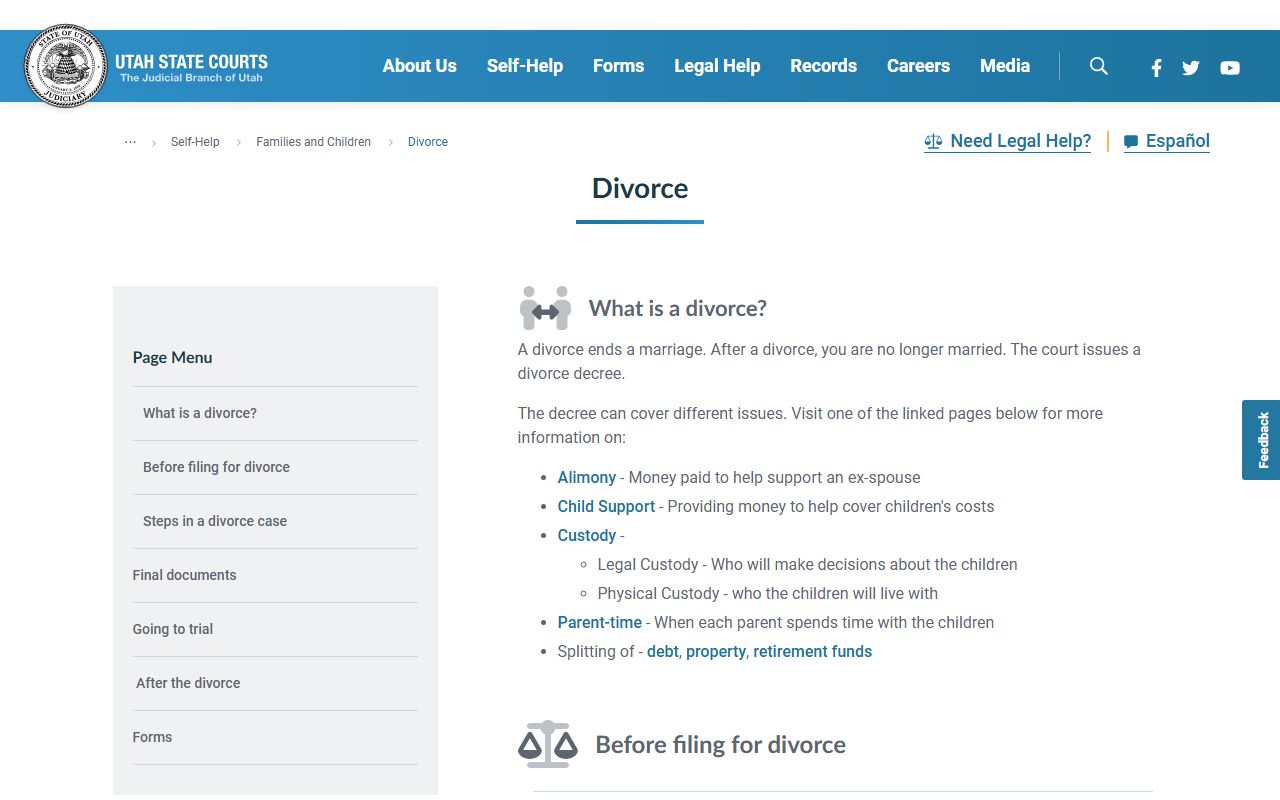
The Utah Courts family law section covers the full divorce process, court forms, and guidance that Emery County residents can use when filing or searching for divorce records.
Emery County Divorce Certificates and State Vital Records
The Utah Office of Vital Records issues divorce certificates for divorces that occurred across the state, including Emery County. A certificate is a condensed document. It confirms the divorce happened and shows the names, date, and county. It does not include property, custody, or support terms. This type of document is useful when you need proof of a divorce without sharing the full court file.
You can order an Emery County divorce certificate from the Utah Vital Records office online, by mail, or in person. The image below shows the resource page for ordering a vital record certificate through the Utah state system, which covers Emery County cases.
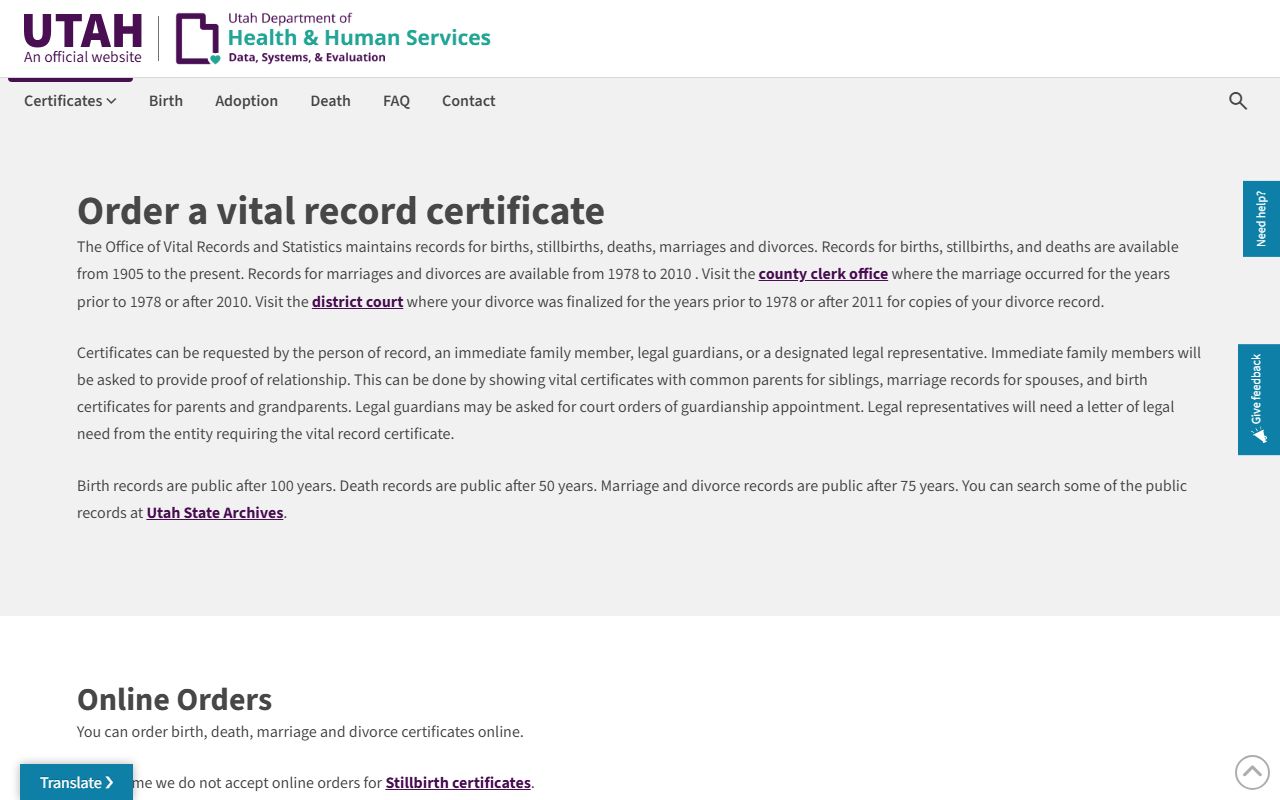
Ordering online through VitalChek is the fastest option for most Emery County residents, and no courthouse visit is required when a basic certificate is all you need.
The state vital records system holds certificates for Utah divorces from 1978 through 2010. Emery County divorces before 1978 or after 2010 are obtained directly from the Seventh District Court clerk in Castle Dale. For those older cases, the court file is the only source. Visit vitalrecords.utah.gov to start an order. You can also review where to write for Utah vital records at cdc.gov, which lists the correct contact for Emery County certificate requests.
Public Access to Emery County Divorce Records
Emery County divorce records are public under Utah's Government Records Access and Management Act. The law at Utah Code Title 63G, Chapter 2 governs record access for all government agencies in the state, including the Seventh District Court. Any person can request to view or copy Emery County divorce records. You do not have to be a party to the case to access them.
The court may restrict certain portions of a file. Records about minor children and detailed financial disclosures can sometimes be sealed or redacted in the public version of the file. The court clerk will explain what is and is not available in a given Emery County case when you make your request. In most cases, the petition, decree, and the main filings are accessible.
Utah Legal Services at utahlegalservices.org can help qualifying Emery County residents navigate records access or the divorce process if they need legal help. The Utah Courts self-help center at utcourts.gov/en/self-help also provides forms and guides for people handling their own cases in Emery County.
Nearby Counties
Emery County borders several other Utah counties. If you are unsure which county court has jurisdiction over your divorce, check the address where you currently live. You must file in your county of residence.