
Kaysville Divorce Records
Kaysville divorce records are held by the Second District Court in Davis County, located in Farmington. Kaysville is a city of about 35,000 people situated between Layton and Farmington in Davis County. All divorce cases filed by Kaysville residents go through this court. Davis County has maintained court and divorce records dating back to 1852, giving the system a long history of public record keeping. If you need to search for or obtain copies of Kaysville divorce records, you can do so in person at the Second District Court or through the Utah courts online case portal.
Kaysville Quick Facts
Where Kaysville Residents File Divorce Cases
Kaysville is part of the Second Judicial District, which covers Davis County. The Second District Court for Davis County is located in Farmington, the county seat. This is where Kaysville residents file new divorce cases and where the courthouse holds all divorce records for the city. Farmington is just a short drive south of Kaysville on I-15.
| Court | Second Judicial District Court (Davis County) |
|---|---|
| Address | 800 West State Street Farmington, UT 84025 |
| Phone | (801) 447-3800 |
| Hours | Monday through Friday, 8:00 AM to 4:30 PM |
| Website | utcourts.gov |
Bring valid photo ID when visiting the courthouse. Security screening is required at the entrance. The Davis County Clerk is at 61 South Main Street, Room 101, Farmington, UT 84025, phone (801) 451-3213. The Clerk handles county-level records but not divorce case files, which are kept by the District Court Clerk.
Kaysville Divorce Records and Davis County History
Davis County has one of the longer court record histories in Utah, with records going back to 1852. Kaysville divorce records from recent decades are held at the Farmington courthouse. Older historical records may be found through the Utah State Archives or through genealogical research databases. This long history means Davis County has a well-organized record-keeping system for divorce filings.
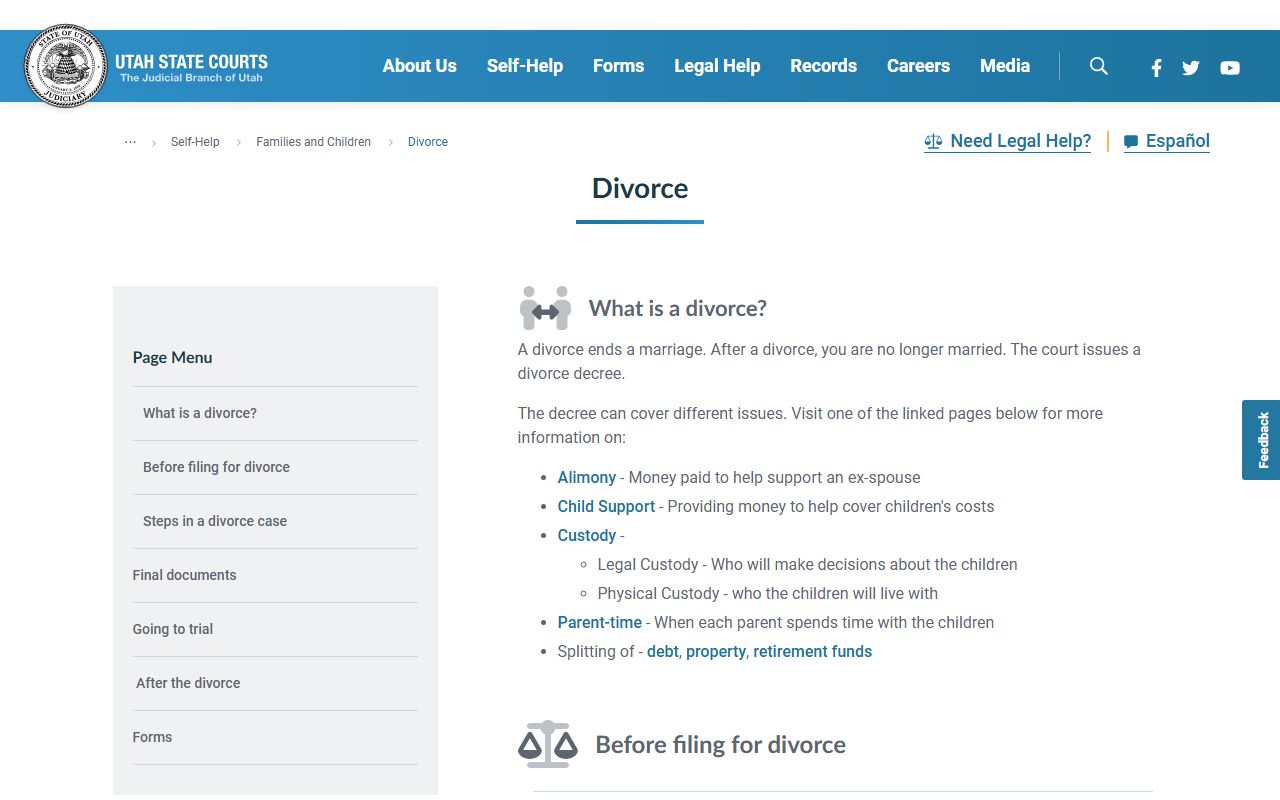
The Utah State Courts self-help page for divorce is a key resource for Kaysville residents who want to understand the process or locate their divorce records online.
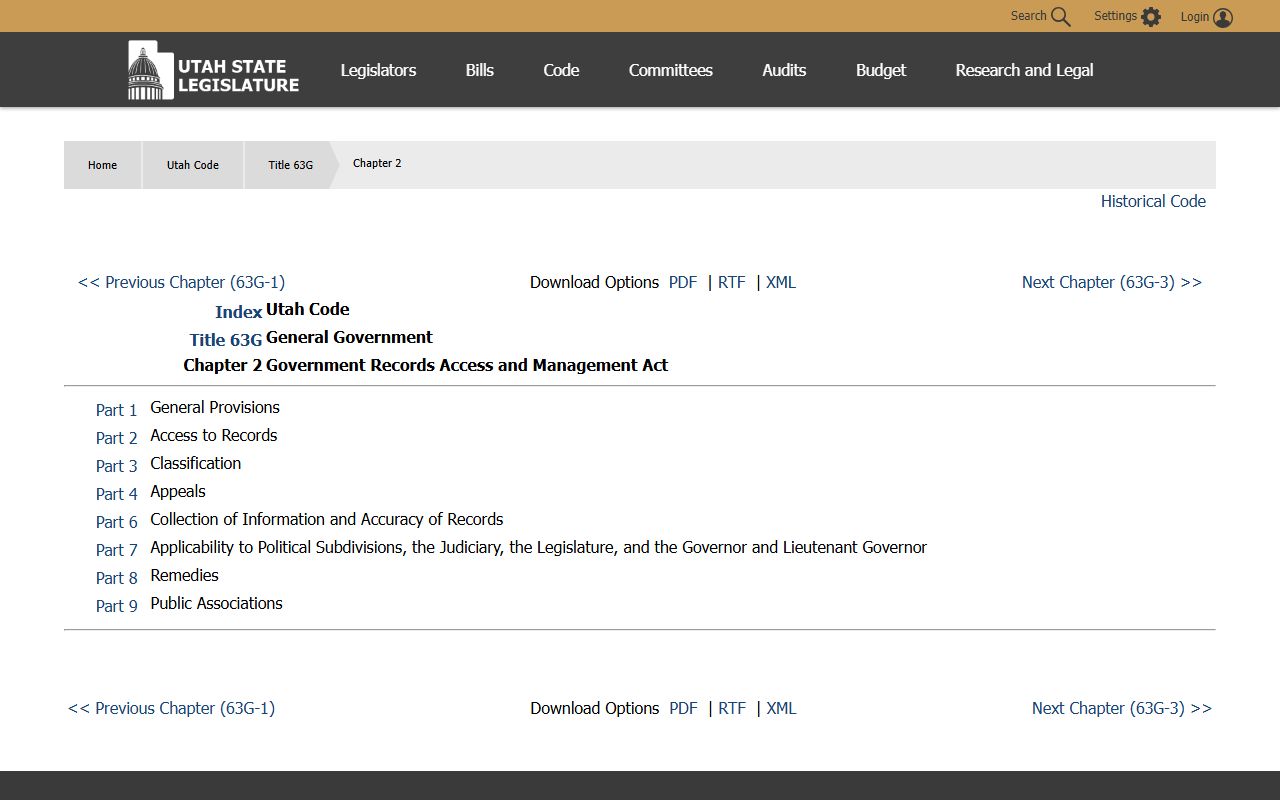
Utah's Government Records Access and Management Act governs public access to Kaysville divorce records and sets the rules for what information courts may redact.
How to Search Kaysville Divorce Records
You can search Kaysville divorce records online or in person. Online searches through the Utah Court portal are free and provide basic case information quickly. In-person searches at the Second District Court Clerk in Farmington give you access to the full case file and allow you to request copies on the spot.
For online searches, go to utcourts.gov and use the public case lookup tool. Search by the name of either spouse or by the case number. Results include names, filing dates, and case status. Documents are not downloadable through the public portal and must be requested from the court clerk. Active parties can access their own case documents through the MyCase system at no charge.
To search in person, visit the Second District Court at 800 West State Street in Farmington. Staff can search by name or case number and print copies. Bring the full name of at least one spouse and an approximate year of filing if possible. This helps narrow the search. Certified copies cost more than plain copies. Call (801) 447-3800 to confirm current fees before you visit.
Note: Divorce records more than 75 years old are fully open to the public with no redactions under Utah law. Newer records may have certain personal details removed from the public copy.
Divorce Filing Requirements for Kaysville Residents
Kaysville residents who want to file for divorce must meet the residency requirement under Utah Code § 30-3-1. At least one spouse must have lived in Utah and Davis County for at least three months prior to filing. Current Kaysville residents satisfy the county residency requirement since Kaysville is entirely within Davis County.
Utah offers both no-fault and fault-based grounds for divorce. No-fault filings cite irreconcilable differences. Fault grounds recognized by Utah law include adultery, willful desertion for more than one year, willful neglect to provide, habitual drunkenness, conviction of a felony, cruel treatment causing bodily injury, and impotency at the time of marriage. Most Kaysville residents filing with mutual agreement use no-fault grounds.
Utah law requires a waiting period before the divorce can be finalized. The waiting period is 30 days when no minor children are involved. It extends to 90 days when minor children are part of the case. Both periods begin from the date of service on the responding spouse. The judge cannot enter a final divorce decree until the waiting period has passed.
Every document filed in a Kaysville divorce case becomes part of the official court record kept at the Second District Court in Farmington. The petition, all filings, and the final decree are preserved. After the decree is signed, both parties receive a copy. The decree is a public record under GRAMA, though sensitive financial and personal details may be redacted from the version available to the general public.
Kaysville Divorce Certificates Through Vital Records
A divorce certificate is different from a divorce decree. The certificate is a short document from the state health department confirming the divorce occurred. It lists names, date, and county. Most legal and financial matters require the full decree rather than the certificate.
The Utah Office of Vital Records issues divorce certificates for divorces that occurred between 1978 and 2010. You can order a certificate online, by mail, or in person. For divorces outside this range, contact the Second District Court Clerk in Farmington. The Davis County Health Department at 22 South State Street, Clearfield, UT 84015, phone (801) 525-5000, can also assist with vital records questions for Davis County residents. You can order certified certificates at vitalrecords.utah.gov.
Historical Kaysville and Davis County Divorce Records
Davis County's records go back to 1852, making it one of the earliest-established court systems in Utah. Researchers looking for historical Kaysville divorce records from before living memory can check the Utah State Archives, which holds older court records transferred from district courts. The Archives provides free public access to many historical records.
The FamilySearch Utah Divorce Records page is another strong resource for historical research. It indexes divorce records from across Utah, including Davis County. This is especially useful for genealogical work covering Kaysville families from earlier eras. Both the Archives and FamilySearch can be accessed without visiting the courthouse.
Note: Records more than 75 years old are fully public under Utah law, which makes research into historical Kaysville divorce cases straightforward through these online and archival resources.
Legal Help for Kaysville Divorce Cases
Kaysville residents can turn to several resources for legal assistance in divorce matters. Utah Legal Services provides free legal help to qualifying low-income individuals throughout Davis County, including Kaysville. They can help with forms, explain the law, and in some cases provide direct legal representation.
The Utah Courts self-help center at utcourts.gov has free court forms and step-by-step instructions for handling a divorce without an attorney. This approach works best for uncontested cases. Contested cases or those involving children and significant property generally benefit from professional legal advice. The Utah State Bar offers a referral service to help Kaysville residents find a qualified family law attorney in Davis County.
Davis County Divorce Records
Kaysville is located in Davis County, and all divorce filings go through the Second District Court in Farmington. For more on county-wide records access, court locations, and related resources, visit the Davis County divorce records page.
Nearby Utah Cities
Residents of nearby cities file for divorce at their own county courthouse. Pick a city below to learn about divorce records in that area.